
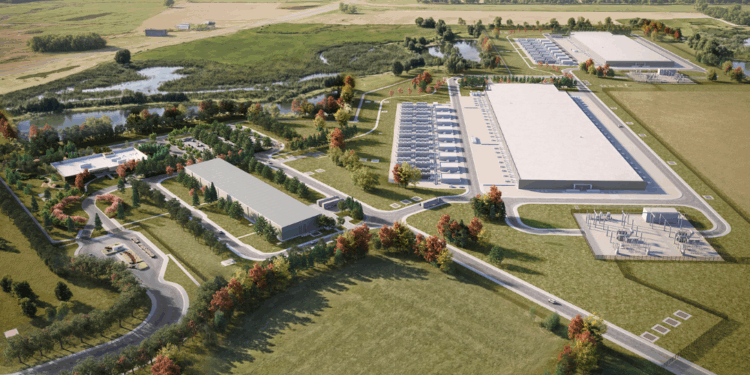
Wisconsin’s Growing Role in the AI Data Center Boom
Wisconsin was rarely mentioned in national data center discussions five years ago. Today, the state has become a strategic Midwest hub for hyperscale data centers, artificial intelligence infrastructure, and large-scale technology investments.
Driven by major developments from companies such as Microsoft, Vantage Data Centers, and Meta, billions of dollars are flowing into AI infrastructure projects across Wisconsin. New data center campuses are under construction, developers are securing land, utilities are preparing for increased power demand, and contractors across the state are evaluating opportunities within one of the fastest-growing infrastructure markets in the United States.
This growth extends far beyond the facilities themselves. The Wisconsin data center market is creating opportunities throughout the infrastructure supply chain, including manufacturers, engineering firms, electrical contractors, automation specialists, control panel manufacturers, and infrastructure suppliers.
For Wisconsin businesses, the expansion of AI infrastructure represents more than a technology trend — it represents a major economic development opportunity.
Companies with expertise in controls engineering, automation integration, electrical systems, and industrial infrastructure may be positioned to support the next generation of AI-powered data centers.
The Project That Put Wisconsin on the National Data Center Map
The project that significantly changed Wisconsin’s position in the data center industry is Microsoft’s Fairwater campus in Mount Pleasant.
Built on land originally associated with the Foxconn development, Microsoft’s Fairwater campus has quickly become one of the largest AI infrastructure developments in the United States. The first phase includes approximately 1.2 million square feet of AI-focused data center infrastructure across multiple buildings.
Microsoft has committed more than $7 billion to the project and has described the facility as one of the world’s most advanced AI data centers.
The scale of these facilities is significant. Modern AI data centers are designed to support hundreds of thousands of advanced AI processors while requiring substantial electrical capacity, cooling systems, automation infrastructure, and monitoring capabilities.
The Fairwater campus has changed how developers, utilities, and infrastructure investors view Wisconsin. The state is no longer considered a future possibility for large-scale data center development — it is now an active and expanding AI infrastructure market.
Microsoft Expansion Plans Could Create Long-Term Opportunities
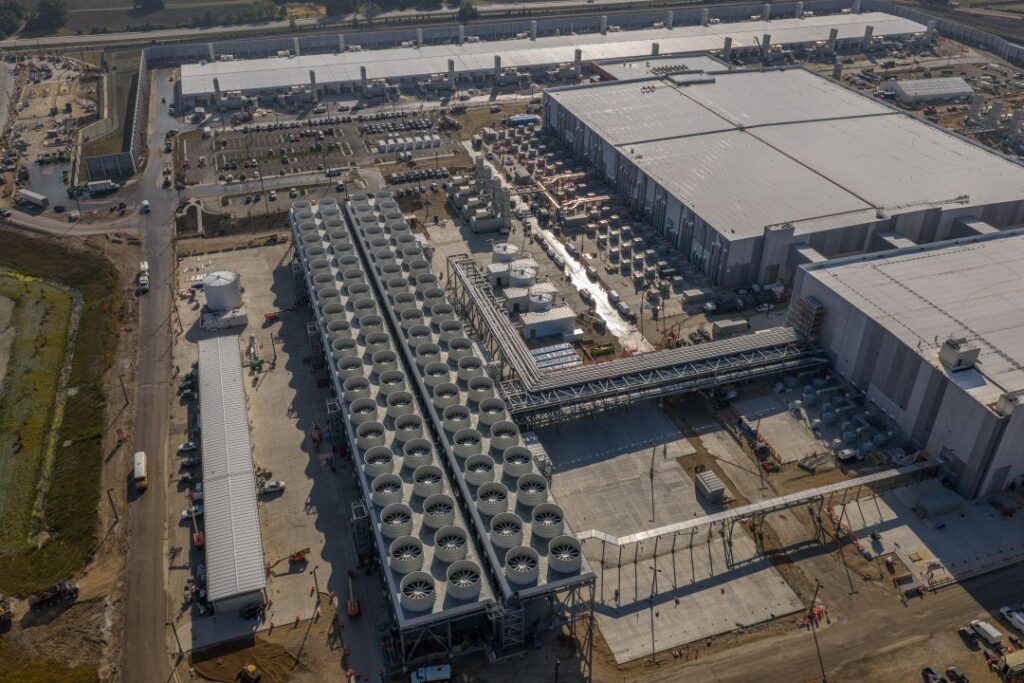
While Microsoft’s current Fairwater campus represents a major investment, future expansion plans could make Wisconsin an even larger AI infrastructure destination.
Local officials have approved plans that could allow Microsoft to construct up to 15 additional data center buildings across multiple campuses in Mount Pleasant.
Some estimates place potential future expansion investments above $13 billion.
If these developments move forward, Racine County could become one of the largest AI infrastructure hubs in North America.
For Wisconsin businesses, this growth is important because large-scale data center projects create long-term opportunities beyond initial construction.
These facilities require ongoing support involving:
- Engineering services
- Controls integration
- Electrical infrastructure
- Cooling systems
- Commissioning support
- Equipment monitoring
- Maintenance services
- Future expansion projects
The impact of these projects can extend across the entire infrastructure ecosystem for years.
Port Washington Data Center Development Becomes One of Wisconsin’s Largest Projects
While Microsoft has received significant attention, another major AI infrastructure project is developing in Port Washington.
Vantage Data Centers is developing its Lighthouse Campus, a 672-acre AI-focused data center development expected to include four facilities totaling approximately 902 megawatts and 2.5 million square feet.
To understand the scale, 902 megawatts represents more electricity capacity than many Wisconsin cities consume.
The project represents an estimated investment of approximately $15 billion and is expected to be completed around 2028.
The development is also connected to the Stargate initiative involving OpenAI, Oracle, and Vantage Data Centers, further increasing Wisconsin’s importance in the national AI infrastructure landscape.
For Wisconsin contractors, manufacturers, and technology suppliers, projects of this size create demand for specialized expertise in:
- Automation systems
- Controls engineering
- Electrical integration
- Mechanical infrastructure
- Monitoring systems
- Commissioning services
Meta Expands Wisconsin’s Data Center Presence in Beaver Dam
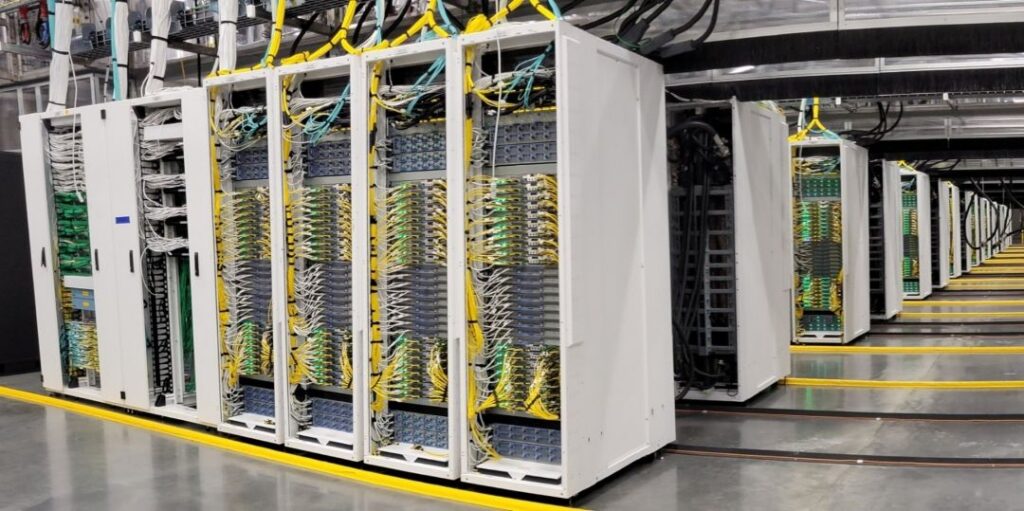
Another indication of Wisconsin’s growing importance in the data center industry is Meta’s investment in Beaver Dam.
Meta is constructing a major data center campus valued at approximately $1 billion.
Although smaller than Microsoft’s Fairwater campus and Vantage’s Lighthouse Campus, the project reinforces an important trend — Wisconsin is attracting investment from multiple global technology companies.
The increasing number of hyperscale developments demonstrates that the state has the resources, infrastructure, and workforce needed to support large-scale AI infrastructure growth.
Additional Wisconsin Communities Being Considered for Future Data Center Growth
Several Wisconsin communities have been connected to potential future data center developments, including:
- Janesville
- Kenosha
- Menomonie
Industry observers continue monitoring these areas as developers search for locations with:
- Available land
- Utility infrastructure
- Power capacity
- Fiber connectivity
- Transportation access
While not every proposed project will move forward, the number of communities being evaluated highlights the rapid expansion of Wisconsin’s data center market.
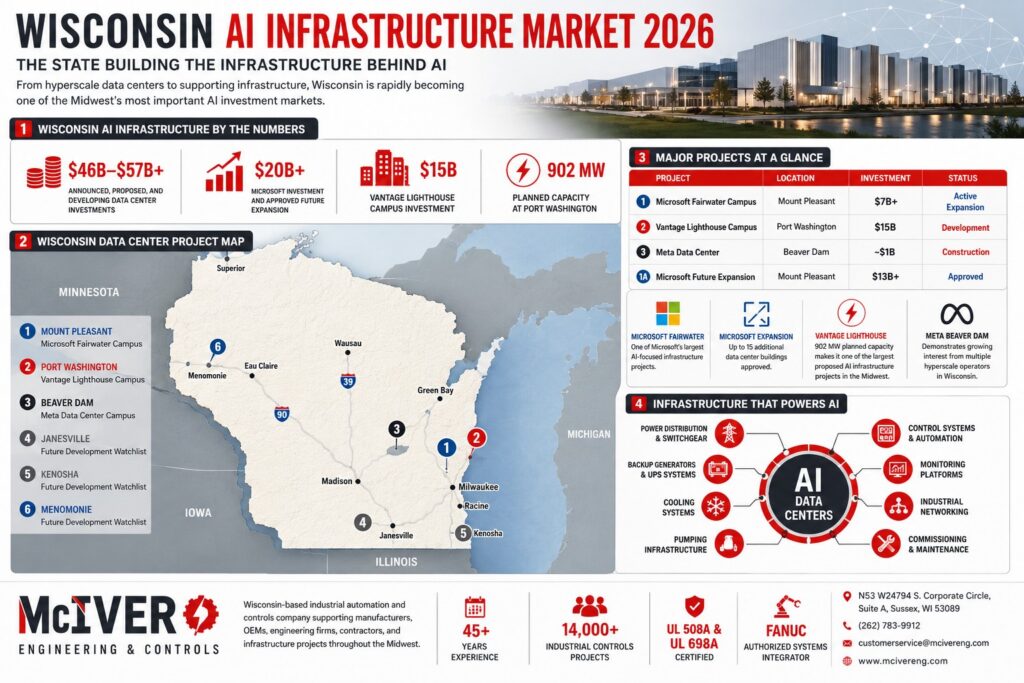
Wisconsin Data Center Projects at a Glance (2026)
Wisconsin’s data center market is experiencing unprecedented growth, driven by major investments from global technology companies and expanding demand for AI infrastructure. These projects are creating opportunities for companies involved in controls engineering, automation, electrical systems, mechanical infrastructure, and industrial support services.
| Project | Location | Investment | Size / Capacity | Status | Potential Supplier Opportunities |
| Microsoft Fairwater Campus | Mount Pleasant, WI | $7+ Billion | Approximately 1.2 million sq. ft. | Phase 1 operational and expanding | Controls systems, electrical infrastructure, cooling systems, commissioning, monitoring, OEM equipment |
| Microsoft Future Expansion | Mount Pleasant, WI | $13+ Billion Proposed | Up to 15 additional data center buildings | Approved for future development | Control panels, automation systems, power systems, mechanical systems, engineering support |
| Vantage Data Centers Lighthouse Campus | Port Washington, WI | Approximately $15 Billion | 2.5 million sq. ft., 902 MW capacity | Under development through 2028 | Cooling infrastructure, electrical systems, controls integration, automation, monitoring |
| Meta Data Center Campus | Beaver Dam, WI | Approximately $1 Billion | Hyperscale data center campus | Under construction | Electrical systems, cooling controls, infrastructure support, commissioning |
| Future Hyperscale Development | Janesville, Kenosha, Menomonie (potential) | TBD | Multiple sites under evaluation | Early-stage planning | Engineering, controls, automation, infrastructure design |
| Utility & Grid Expansion Projects | Statewide Wisconsin | Billions over time | Supporting AI and data center growth | Ongoing | Power distribution, monitoring, controls, SCADA, infrastructure upgrades |
Wisconsin Data Center Growth by the Numbers
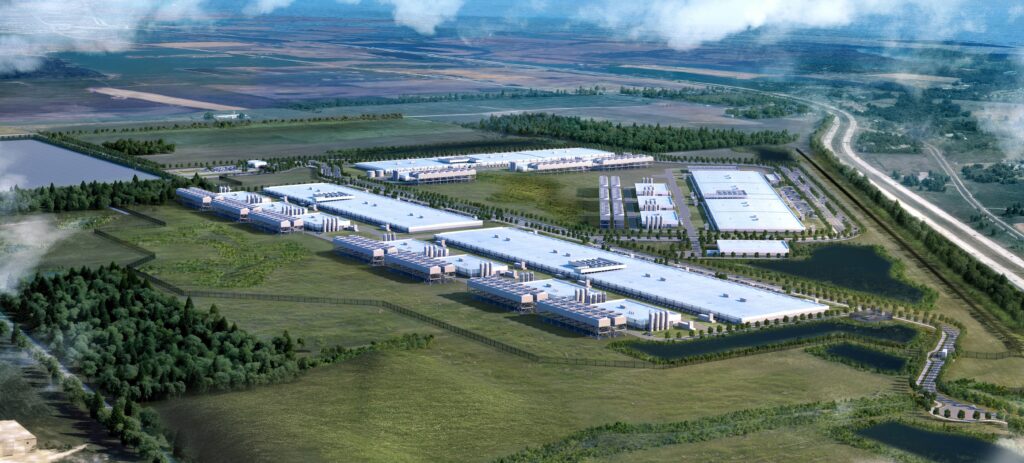
The expansion of AI infrastructure across Wisconsin represents one of the largest technology-driven economic opportunities in the state’s history.
Key market indicators include:
$46B-$57B+ in Potential Data Center Investment
The estimated value of announced, proposed, and developing hyperscale data center projects across Wisconsin demonstrates the scale of investment entering the state.
20+ Million Square Feet of Potential Data Center Space
Future developments could create millions of square feet of advanced infrastructure designed to support artificial intelligence workloads, cloud computing, and digital services.
902 MW Planned Capacity
Vantage Data Centers’ Lighthouse Campus represents one of the largest proposed data center developments in the Midwest, with significant power requirements to support AI operations.
$20+ Billion Microsoft Investment Potential
Microsoft’s announced and proposed investments in Mount Pleasant demonstrate the company’s long-term commitment to Wisconsin’s AI infrastructure ecosystem.
2026-2028 Growth Window
The next several years represent a critical period as Wisconsin projects move through construction, commissioning, expansion, and supplier development phases.
Why Is Wisconsin Becoming a Data Center Hub?
Many people associate large-scale data centers with established markets such as Northern Virginia, Texas, and Arizona. However, Wisconsin has emerged as an attractive location for hyperscale and AI infrastructure development due to several important advantages.
Access to Available Land
Modern AI data centers require significant amounts of land, often hundreds or thousands of acres.
Finding large development sites near major metropolitan areas has become increasingly challenging. Wisconsin provides developers with more flexibility compared to many mature data center markets where available land is limited and costs continue to increase.
Large parcels of land, combined with access to transportation and infrastructure, make Wisconsin an attractive option for future development.
Strategic Proximity to Chicago
Wisconsin offers access to one of the largest technology, business, and connectivity hubs in North America while avoiding some of the space limitations and higher costs associated with established markets in Illinois.
The state’s location provides strategic advantages for companies seeking access to:
- Major business networks
- Fiber infrastructure
- Transportation systems
- Regional customers and partners
Available Power and Infrastructure Capacity
Large-scale AI data centers require extensive infrastructure support, including:
- Reliable electrical systems
- High-capacity power distribution
- Fiber connectivity
- Transportation access
- Utility partnerships
Many Wisconsin communities already have the foundational infrastructure required to support major technology investments.
Strong Engineering and Manufacturing Workforce
Wisconsin has decades of experience in manufacturing, automation, controls engineering, and industrial systems.
These skills directly align with the growing needs of modern AI infrastructure projects.
Companies experienced in:
- Industrial automation
- PLC programming
- Electrical systems
- Control panel manufacturing
- Equipment integration
may find increasing opportunities as data center development expands throughout the state.
What Wisconsin Data Center Growth Means for Manufacturers and Contractors
When people think about a billion-dollar data center project, they often picture a building filled with servers.
However, the servers are only one part of the infrastructure required to operate these facilities.
Every hyperscale data center depends on a complex network of supporting systems that allow it to operate reliably, efficiently, and safely.
Major infrastructure requirements include:
- Electrical infrastructure
- Backup power systems
- Cooling systems
- Pumping systems
- Automation systems
- Control panels
- Monitoring platforms
- Network infrastructure
- Commissioning support
- Ongoing maintenance
For Wisconsin companies involved in industrial automation, controls, electrical systems, cooling technologies, and infrastructure construction, the data center market could create opportunities for years to come.
The supporting infrastructure required for these projects represents billions of dollars in additional investment beyond the physical buildings themselves.
This is where many Wisconsin businesses may discover new opportunities.
Wisconsin Companies That Could Benefit From Data Center Growth
Many organizations assume they are not connected to the data center industry because they do not build the facilities themselves. However, the growth of AI infrastructure creates opportunities for a wide range of Wisconsin businesses that support the systems required to operate these advanced facilities.
Modern data centers depend on specialized expertise across electrical systems, mechanical infrastructure, automation, controls, engineering, and equipment integration.
Companies that already support industrial operations may have transferable skills that align closely with the needs of hyperscale and AI-focused data center projects.
The companies most likely to benefit from Wisconsin’s data center expansion include:
Electrical Contractors and Infrastructure Providers
Large-scale data centers require extensive electrical infrastructure to support high-performance computing environments.
Electrical contractors may support projects involving:
- Power distribution systems
- Electrical installations
- Switchgear integration
- Backup power systems
- Generator connections
- Commissioning support
- Electrical testing and validation
As AI workloads continue to increase power requirements, reliable electrical infrastructure becomes one of the most critical components of every data center project.
Wisconsin electrical contractors with experience in industrial and commercial infrastructure may be positioned to support upcoming developments throughout the state.
Mechanical Contractors and Cooling Specialists
AI applications generate significant heat, making advanced cooling infrastructure essential for modern data centers.
Mechanical contractors play a critical role in designing, installing, and maintaining systems such as:
- Chilled water systems
- Cooling loops
- Pumping systems
- Heat management solutions
- Mechanical equipment integration
As data centers become larger and more powerful, cooling efficiency becomes increasingly important.
Companies with experience in industrial cooling, process systems, and mechanical integration may find new opportunities within Wisconsin’s expanding data center market.
Engineering Firms
The complexity of modern data centers requires specialized engineering expertise throughout the entire project lifecycle.
Engineering firms may contribute to:
- System design
- Project planning
- Equipment specifications
- Testing and validation
- Commissioning
- Infrastructure optimization
- Ongoing improvements
As facilities become more advanced, engineering support becomes essential to ensure all systems operate efficiently and reliably.
Control Panel Manufacturers
Control systems are a critical component of every modern data center.
Custom control panels help manage and monitor important infrastructure, including:
- Power systems
- Cooling equipment
- Pumps
- Mechanical systems
- Automated processes
- Building management systems
Control panel manufacturers with experience in industrial automation and UL-certified systems may be well-positioned to support data center projects requiring reliable, customized solutions.
Automation Integrators
Data centers increasingly rely on automation to improve efficiency, reliability, and operational visibility.
Automation integrators may support systems involving:
- Equipment monitoring
- Automated controls
- Alarm management
- System communication
- Data collection
- Equipment sequencing
As facilities become larger and more complex, automation plays a growing role in maintaining uptime and performance.
OEM Equipment Manufacturers
Original equipment manufacturers (OEMs) also have opportunities within the expanding data center ecosystem.
Many data center systems require specialized equipment that must be integrated, tested, and configured before deployment.
Potential opportunities include:
- Cooling equipment
- Pumping systems
- Generator packages
- Power management systems
- Pre-engineered equipment solutions
OEM manufacturers that understand controls integration and automation requirements can provide additional value to data center developers and contractors.
The Controls and Automation Challenge in Modern Data Centers
One of the most overlooked aspects of modern data center development is the complexity involved in making every system communicate and operate together.
A hyperscale facility may contain equipment from dozens of different manufacturers, each with unique controls, communication protocols, and operating requirements.
For a data center to operate efficiently, multiple systems must work together seamlessly.
Examples include:
- Generators communicating with transfer switches
- Cooling systems communicating with monitoring platforms
- Pumps communicating with building automation systems
- Sensors providing real-time operational data
- Alarms being coordinated across multiple systems
Every component must function reliably from the first day of operation.
Why Controls Engineering Is Becoming More Important
Many commissioning delays do not occur because equipment fails. Instead, problems often arise when different systems cannot communicate properly or operate together as intended.
As AI-focused data centers continue increasing in size and complexity, controls engineering becomes a critical factor in:
- System reliability
- Operational efficiency
- Faster commissioning
- Reduced downtime
- Long-term performance
This growing demand aligns closely with Wisconsin’s existing industrial expertise in automation, manufacturing, and control systems.
How McIver Engineering & Controls Supports Growing Infrastructure Needs
Companies such as McIver Engineering & Controls have spent decades helping businesses solve complex controls, automation, and integration challenges.
The same engineering disciplines used to support:
- Industrial manufacturing
- Machine builders
- Food processing facilities
- Life sciences operations
are increasingly relevant to modern infrastructure projects.
With extensive experience in controls engineering, UL-certified control panels, PLC programming, automation integration, startup assistance, and commissioning support, McIver Engineering & Controls helps organizations manage complex systems that require reliable communication and performance.
Whether supporting OEM equipment manufacturers, contractors, engineering firms, or infrastructure providers, expertise in industrial controls and automation is becoming increasingly valuable as AI infrastructure expands across Wisconsin and the Midwest.
What Data Center Projects Could Come Next in Wisconsin?
While Microsoft’s continued expansion in Mount Pleasant remains one of the largest future opportunities, industry observers are also monitoring additional regions throughout Wisconsin.
Communities including:
- Janesville
- Kenosha
- Menomonie
have been discussed as potential locations for future data center development due to:
- Available land
- Infrastructure access
- Power availability
- Regional connectivity
Additional opportunities may emerge through:
- Colocation providers
- Edge data centers
- Utility infrastructure upgrades
- AI-related manufacturing investments
- Data center supply chain expansion
Historically, large hyperscale projects attract additional investment from suppliers, contractors, and service providers.
Wisconsin may already be entering that next phase of infrastructure growth.
Looking Ahead: Wisconsin’s AI Infrastructure Future
Wisconsin’s data center market is still in its early stages, but the scale of investment already underway is significant.
With more than $46 billion to $57 billion in announced, proposed, and developing hyperscale projects, the state is becoming one of the most important emerging AI infrastructure markets in the Midwest.
The next decade could bring continued growth in:
- Data center construction
- Industrial automation
- Controls engineering
- Electrical infrastructure
- Manufacturing support
- Technology-driven economic development
Five years ago, Wisconsin was rarely included in national data center conversations.
Today, the question is no longer whether Wisconsin will participate in the AI infrastructure boom.
The question is how large Wisconsin’s role will become as the demand for advanced computing continues to grow.
About McIver Engineering & Controls
McIver Engineering & Controls is a Wisconsin-based industrial automation and controls company with more than 45 years of experience and over 14,000 controls projects completed across North America.
The company provides:
- UL 508A control panels
- Controls engineering
- PLC programming
- Automation integration
- Startup assistance
- Commissioning support
McIver Engineering & Controls works with manufacturers, OEMs, engineering firms, contractors, and infrastructure providers throughout Wisconsin and the Midwest to develop reliable, efficient, and scalable automation solutions.
As Wisconsin’s AI infrastructure market continues to expand, experienced controls and automation partners will play an increasingly important role in supporting the systems behind the next generation of data centers.
FAQs:
What data center projects are under construction in Wisconsin?
Wisconsin is becoming a major hub for AI and cloud infrastructure. Microsoft’s Fairwater campus in Mount Pleasant is the state’s largest data center project, with its second facility currently under construction and expected to be completed around 2028. Microsoft also has approvals to expand the campus with up to 15 additional buildings. Other significant projects include Meta’s hyperscale data center in Beaver Dam, Vantage Data Centers’ planned Lighthouse (Stargate) AI campus in Port Washington, and the proposed QTS hyperscale campus in DeForest, reflecting continued investment in AI computing, cloud services, and digital infrastructure across Wisconsin.
Why are data center companies investing in Wisconsin?
Wisconsin is attracting major data center investment because it offers large development sites with room for expansion, a growing skilled workforce supported by the nation’s first Datacenter Academy, reliable power infrastructure, business-friendly incentives and tax exemptions that help reduce construction and operating costs, and a strategic Midwest location that provides low-latency access to Chicago and other major markets.
What is Microsoft’s Fairwater campus?
Microsoft’s Fairwater campus in Mount Pleasant is a next-generation AI data center designed to support large-scale artificial intelligence computing. Once fully built, the campus is expected to span approximately 9 million square feet and include advanced liquid cooling, extensive underground infrastructure, and one of Microsoft’s largest AI investments in the United States. The campus is being developed to support one of the world’s most powerful AI supercomputing environments.
What companies can benefit from Wisconsin’s data center growth?
Many Wisconsin manufacturers are well positioned to support the growing data center industry by supplying products such as electrical control panels, power distribution equipment, structural steel, cooling systems, piping, and prefabricated equipment modules. They can also participate in projects by partnering with engineering firms, EPCs, mechanical and electrical contractors, and OEM equipment suppliers. As AI infrastructure investment accelerates across the Midwest, demand for high-quality manufacturing and mission-critical infrastructure components is expected to continue growing. This creates new opportunities for Wisconsin companies with expertise in electrical, mechanical, and automation systems.
What infrastructure systems are required in modern AI data centers?
Modern AI data centers require high-density electrical systems to power thousands of GPUs (graphics processing units that perform the intensive calculations used for artificial intelligence), advanced liquid cooling and extensive mechanical piping to manage the heat they generate, and ultra-high-bandwidth networking to connect AI clusters with minimal latency. They also depend on massive underground electrical and fiber infrastructure, with Microsoft’s Fairwater campus alone expected to include more than 120 miles of underground cabling. Together, these systems provide the power, cooling, connectivity, and reliability needed to support large-scale AI computing.
What role do controls and automation play in data centers?
Controls and automation are essential to the reliable operation of modern AI data centers. They continuously monitor and control cooling systems, power distribution, backup power, pumps, and other critical infrastructure to keep equipment operating within safe limits. Automation also improves energy efficiency, supports predictive maintenance by identifying issues before failures occur, and helps maintain the high levels of uptime required for hyperscale AI facilities.
How can Wisconsin manufacturers participate in the data center supply chain?
Wisconsin manufacturers can support the growing data center industry by supplying products such as structural steel, electrical equipment, mechanical piping, cabling, control panels, HVAC systems, and power infrastructure. They can also partner with engineering firms, EPC contractors, and major technology companies developing AI infrastructure across the Midwest. As investment in hyperscale data centers continues to grow, manufacturers with expertise in electrical, mechanical, and automation systems will be well positioned to become part of this expanding supply chain.